



 Hemis
 Arm
 SDG




 English
 русский
Aircraft Crash Caused by an Unlubricated "Jackscrew"
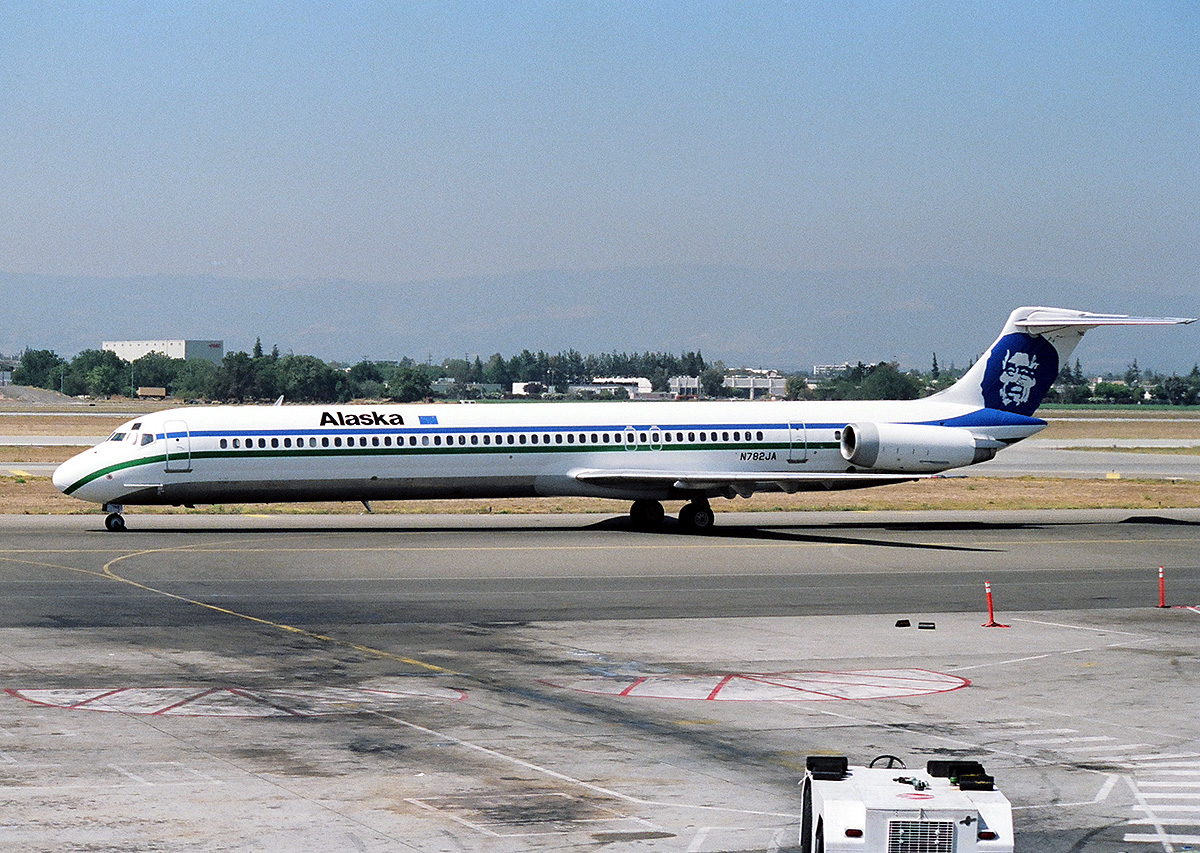
On 31 January 2000, a jet aircraft belonging to Alaska Airlines, carrying 88 passengers and crew, crashed into the sea. Negligence and irresponsibility led to a terrible disaster. When one of the mechanics stated that the repair work was not being carried out to a sufficient standard, he was dismissed. During the investigation, it was established that those involved had approached their duties with indifference.
Puerto Vallarta is a popular resort on the Pacific coast. Most of the passengers on Flight 261 were returning from vacation. Experienced pilots were at the controls of the aircraft: the captain, Ted Thompson, and the first officer, William Tansky. They had logged thousands of flight hours in the MD-83 and knew the aircraft well. The MD-83 is a very reliable aircraft that is easy to handle.
On 31 January 2000, Flight 261 was prepared for departure, and the pilots did not even suspect that a fatal danger lurked in the tail section of the aircraft. After the aircraft took off, the captain and first officer noticed that something was wrong with the aircraft. The horizontal stabilizer, located in the tail section of the aircraft, had jammed.
On the MD-83, the stabilizer takes the form of a horizontal surface about 12 metres wide. Two elevators are also located in the same tail section. The pitch angle of the aircraft is controlled by means of the stabilizer and the elevators. When the stabilizer jammed, the pilots assumed that the problem was related to the electric motor.
The crew believed that the "jackscrew" was the reason the stabilizer was not working. To move it, the pilots used two switches simultaneously, one located on the control yoke and the other on the control panel. Without the stabilizer, the aircraft could not be brought to a level attitude, and it continued to pitch toward the ground. At an altitude of 8,500 metres, the pilots disengaged the autopilot and switched to manual control of the aircraft. They pulled the control yoke toward themselves with all their strength, and after 7 minutes they climbed to an altitude of 10,000 metres. During the flight, they contacted the maintenance department of their airline. Unfortunately, the maintenance department was unable to offer any assistance.
Throughout the flight, the crew controlled the aircraft manually, and the airliner repeatedly pitched its nose downward. The pilots tried once more to activate the stabilizer. To do so, they operated two electric motors at the same time. But in the next moment they heard a loud noise, and the aircraft suddenly began to plunge steeply toward the ground. For nearly a minute, the pilots pulled on the control yoke, trying to bring the aircraft back to a level attitude, and they succeeded.
The aircraft flew toward Los Angeles, intending to make an emergency landing there. Once the situation had stabilized somewhat, the pilots asked the air traffic controller to allocate additional airspace above and below the aircraft so that they could determine the cause of the malfunction.
Trying to calm the frightened passengers, the pilots announced that they would land in Los Angeles within the next 20–30 minutes. Unfortunately, this did not happen. The crisis that had begun on board the aircraft ended in a tragic crash.
When Flight 261 was preparing to land in Los Angeles, another malfunction occurred in its tail section, and the aircraft began to dive downward. Sixty seconds later, the aircraft crashed into the Pacific Ocean at a speed of 400 kilometres per hour.
Rescue helicopters soon reached the scene, but there were no survivors. The crew and all 88 passengers were killed. An investigation into the tragedy was launched immediately, but the wreckage of the aircraft lay at a depth of 200 metres. After the "black boxes" were recovered, the National Transportation Safety Board (NTSB) began studying the recordings of the pilots' conversations.
During the investigation, the investigators found that the "jackscrew" had been almost entirely unlubricated. Alarmed by this fact, the experts immediately informed the US Federal Aviation Administration. The latter, in turn, ordered an inspection of all MD-83 aircraft. As a result, it was found that 6 of the 34 aircraft in the Alaska Airlines fleet were in the same condition as the aircraft that crashed. Thus, the failure to lubricate a simple mechanism caused the deaths of all the passengers.
In October 1998, one of the airline's mechanics filed a complaint against Alaska Airlines with the US Federal Aviation Administration. He had described in detail everything related to the maintenance of the aircraft. A year before the crash, a government inspection was carried out. The inspectors took away documents relating to the maintenance of the company's aircraft, but no serious measures were taken.